Vaer sells eleven core lines, $189 for a quartz field watch to $1,099 for a Swiss automatic, on four kinds of movement. Assembly is stated per model and happens in three places, and that, more than the movement, is what the price ladder measures.
Checked 19 September 2026 · list prices on the maker's site that day unless marked street
Vaer is a Los Angeles brand, founded in 2016 and self-funded, selling direct from its own site. Its pitch is a watch you can swim in at a price that does not need insuring, and the catalogue is wider than the pitch: the same D-series dial comes as a $239 quartz, a $299 or $429 solar and a $729 automatic, with the case moving from 39 mm to 42 mm across them. The useful question is which Vaer, and this page answers it by movement and by assembly site.
Three things the spec sheets settle. Every current model has a 20 mm lug and a sapphire crystal. Water resistance is 200 m on the divers and GMT, 150 m on the DS2, and 100 m on the field, calendar and chronograph lines. Assembly is stated on each product page and is not one place: the D4, D5, C5, C3, A5, S5 and G5 pages say USA assembled, the A12 says Switzerland, and the DS2, DS4 and RS1 say Hong Kong. A buyer paying $429 for a D4 over $299 for a DS4 is paying mostly for the first of those and should know it.
Founded2016
BasedVenice (Los Angeles), California, USA
AssembledUSA Assembled (moved assembly to the United States in 2018, per the brand); premium A12 is hand-assembled in Switzerland; entry DS2/DS4/S-series and RS1 are assembled in Hong Kong per each product page
SoldPrimarily direct-to-consumer via vaerwatches.com; a store locator exists and third-party stockists (e.g. Ellicott & Co., Tide & Thyme) list some models.
Warranty2 years from purchase, original owner, non-transferable; covers defects in materials and workmanship; excludes wear, impact, batteries, water damage with unsealed crown (https://www.vaerwatches.com/pages/warranty)
Read the table by movement first. Solar quartz (Epson VS22 and VS42) runs the D4, DS4, C5 and C3 and needs no battery change. Miyota 9015 automatics run the D5 and A5, and the Miyota 9075 in the G5 is a true GMT with an independently jumping local hour. The A12 carries the one Swiss movement, a Sellita SW260-1. The S5 and DS2 are ordinary battery quartz, and the RS1 is a Seiko VK63 meca-quartz chronograph, so its pushers snap back like a mechanical.
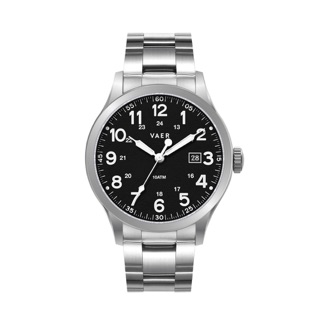
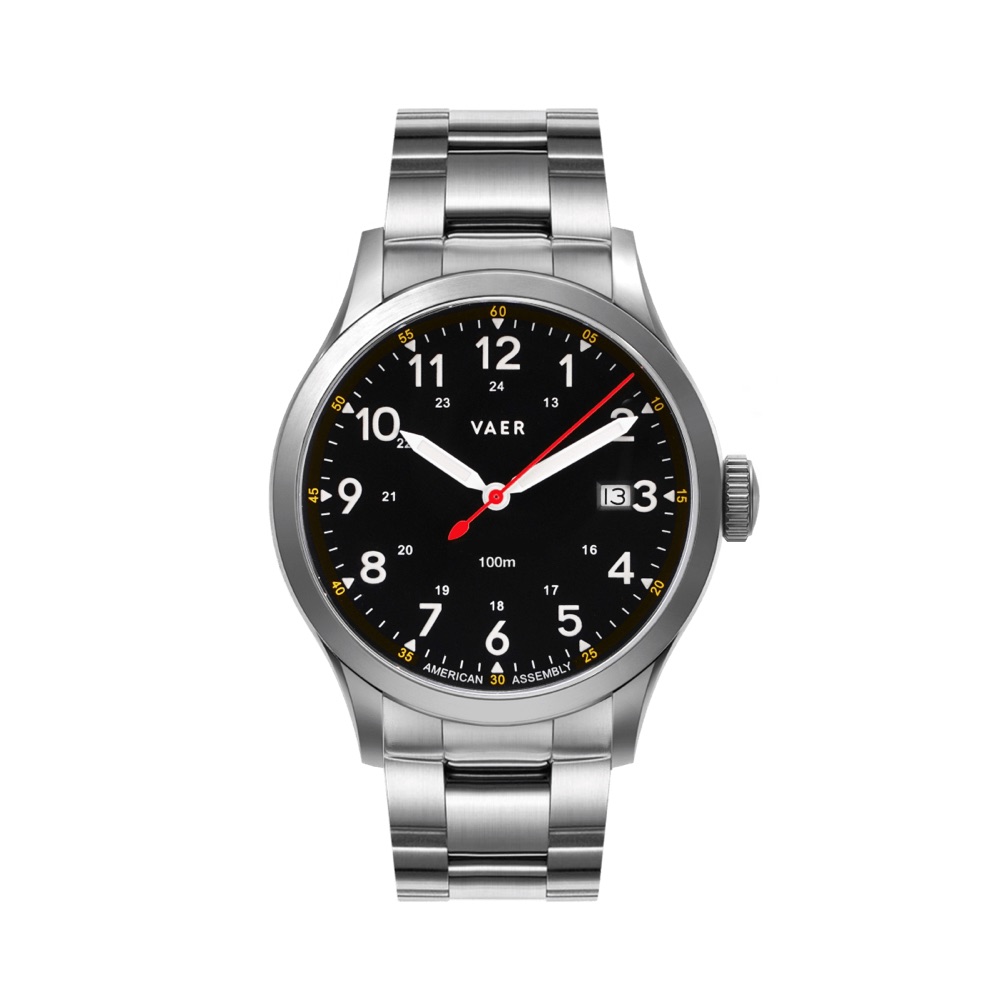
Ø40 mm · quartz · 100 m · $189 · Cheapest · quartz · day-date
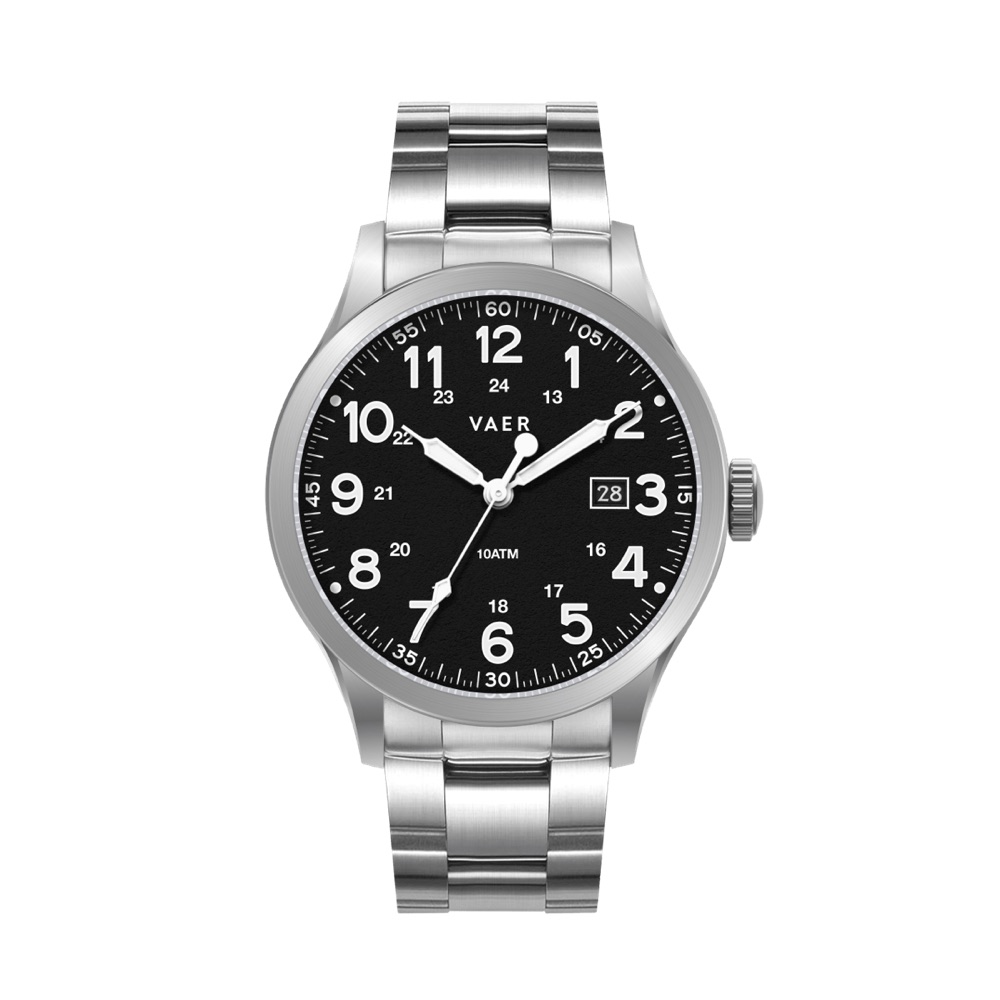
Vaer S5 Calendar Field 40mm
40 × 48 mm · ref 40 × 47
MovementMiyota 2035 quartz
Case40 mm
Lug to lug48 mm
Thickness9.4 mm
Lug width20 mm
Water resistance100 m
Crystalflat sapphire, internal AR
Case material316L steel
LumeSuper-LumiNova C1, 15 layers
Price$189
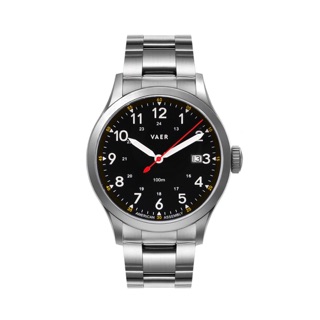
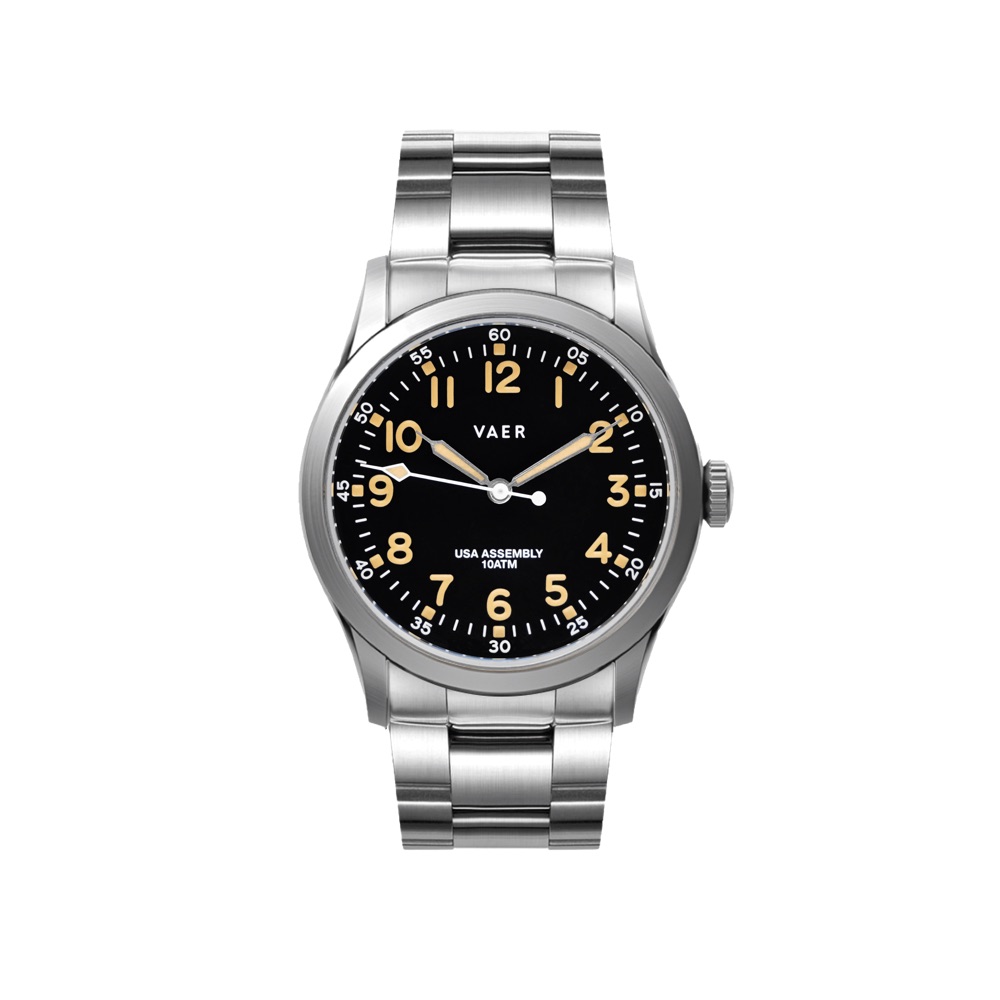
The cheapest sapphire-crystal watch on this site at $189, and a sound one if a day-date and 100 m are all you need: 40 mm, 9.4 mm thick, Miyota 2035 quartz. Lug-to-lug is 48 mm, so on paper it sits larger than the 36 mm C3 despite the family look, and a wrist under 6.5 inches should look there. At $189 nothing else in the data has sapphire; the C5 at $349 is the same case in solar without the day-date, and the $160 is the charging. Buy this for the calendar and the price. The movement is ordinary quartz, which is the trade.
The way to try the D-series case for $239 before spending three times as much on the D5: 39 mm, 10.4 mm thick, 150 m, Miyota GM12 quartz, on the same 46 mm lug-to-lug as the automatic. Assembled in Hong Kong rather than the US, which is where the price comes from. Against the DS4 solar at $299 you give up 50 m and the solar cell for $60 and the case is 3 mm smaller. Against the D5 at $729 the difference is the movement and the assembly site, and nothing about the footprint. The S5 at $189 is the field alternative for less; this is the diver shape at its cheapest.
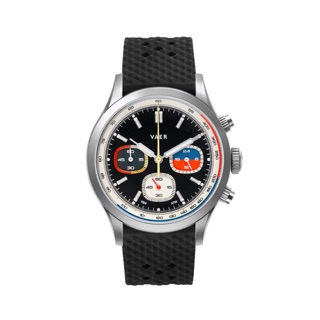
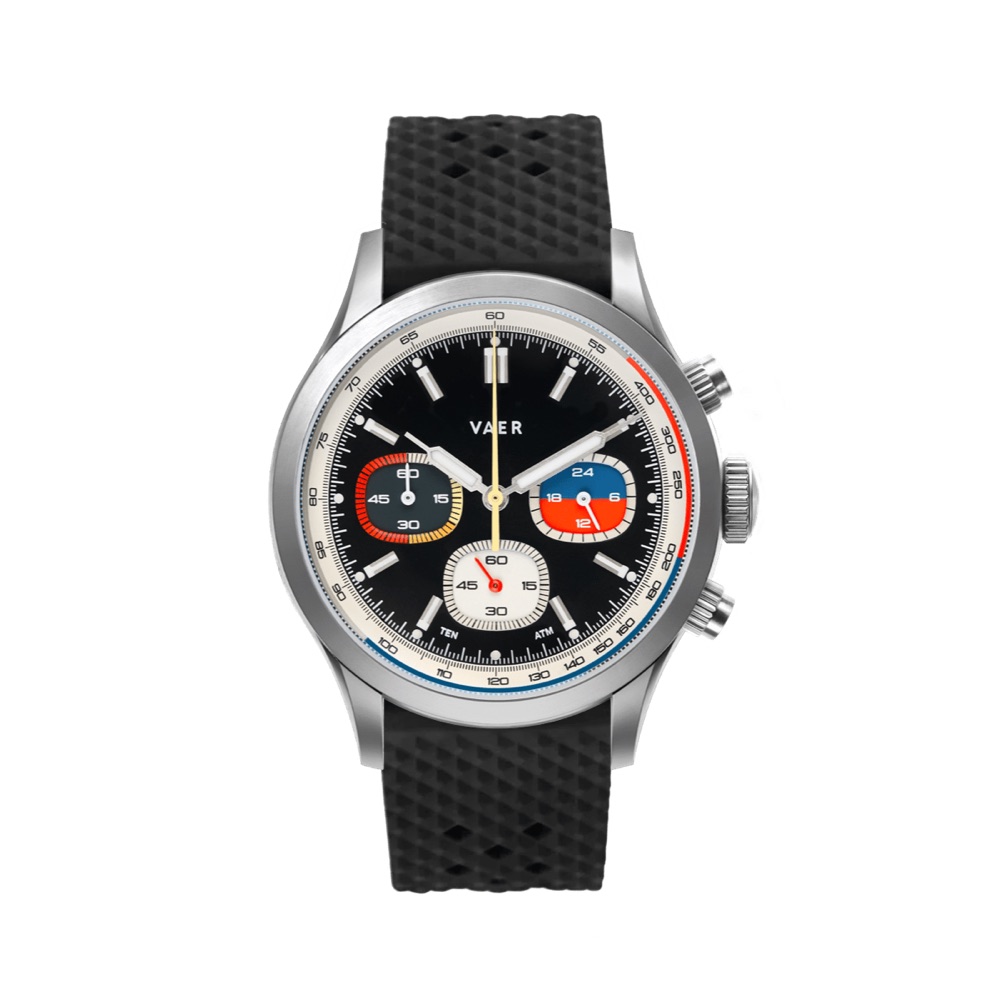
The only chronograph Vaer makes, at $279, on the Seiko VK63 meca-quartz: battery timekeeping, a mechanical chronograph module, so the pushers snap back like a mechanical. 40 mm, 11.8 mm thick, 48 mm lug-to-lug, 100 m, and the only current model with a tachymeter. Assembled in Hong Kong. Against the S5 at $189 the $90 buys the chronograph and 2.4 mm of thickness. Unimatic's U3-AEG runs the sibling VK64 at $840, which puts $279 in proportion; the Vaer's case is the plainer one and the money reflects it.
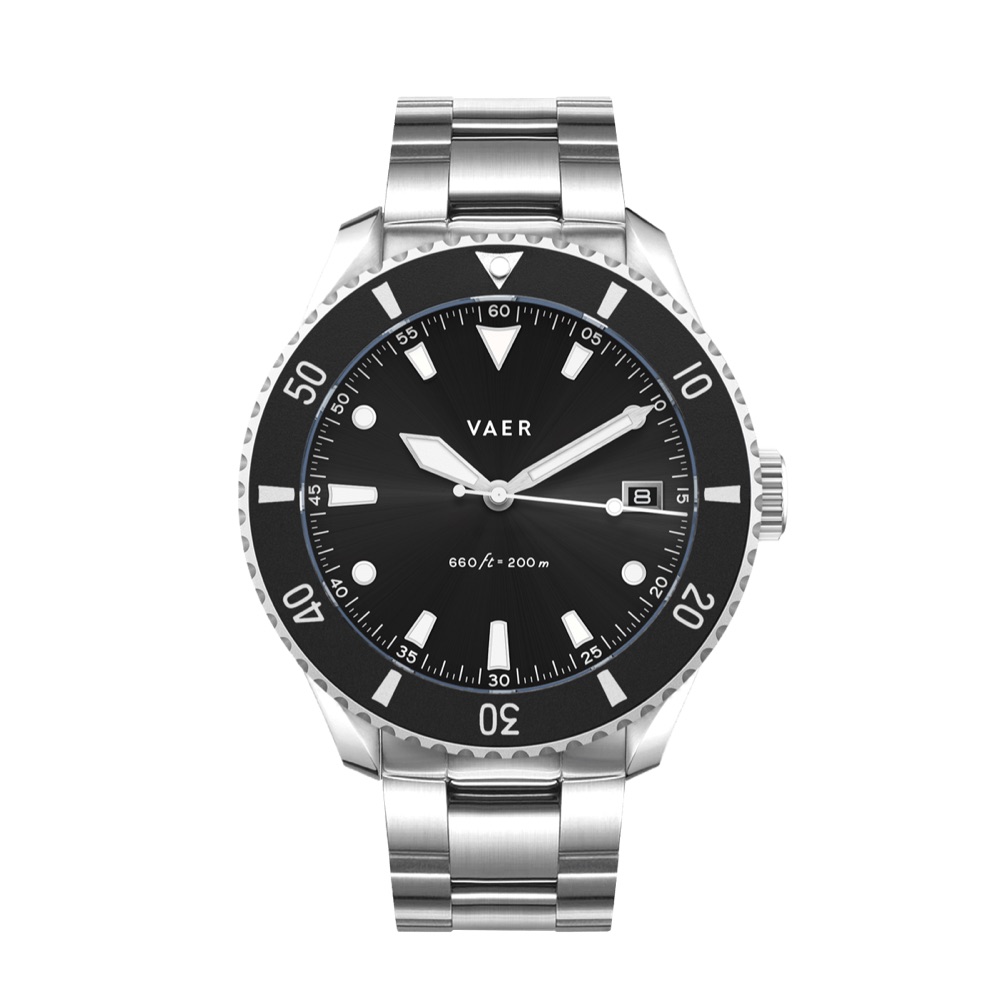
The 42 mm solar diver at $299, assembled in Hong Kong, and the cheapest 200 m Vaer: 48 mm lug-to-lug, 11.6 mm thick, Epson solar quartz, so a charge from daylight and no battery service. The D4 at $429 is the US-assembled 39 mm version of the same idea, $130 more and 2 mm shorter; the $130 is the assembly site and the size. At this money the San Martin 6200 at $275 is the mechanical alternative, on an NH35 with a bracelet, at 38 mm. Buy the DS4 for the solar movement and the 42 mm; buy the D4 if 48 mm is too long.
The smallest Vaer at 36 mm and 43 mm lug-to-lug, $319, and the one for a wrist under 6.5 inches or a shirt cuff: solar quartz, 100 m, 12 mm thick. The thickness is the price of a solar cell under a small dial, and it is 1.6 mm more than the 40 mm C5 on the same movement. The A12 at $1,099 shares the 36 mm and 43 mm footprint with a Sellita inside; the C3 is that case for $780 less, in quartz. The Nodus Unity at $675 is 36.5 mm and 43.5 mm on a Miyota 9015, if the movement matters more than the money.
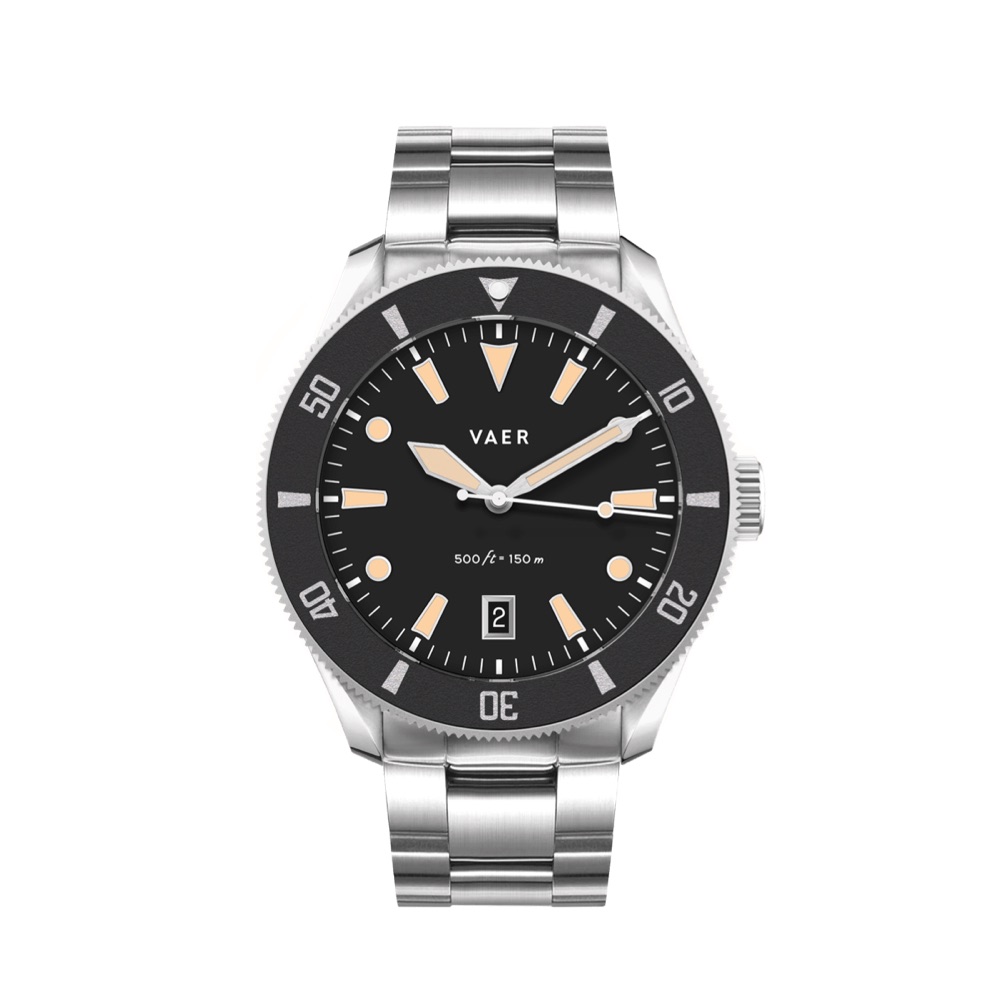
The 40 mm solar field watch at $349: Epson VS42, 10.4 mm thick, 48 mm lug-to-lug, 100 m, assembled in the US. Against the S5 the $160 buys solar charging and loses the day-date. Against the A5 automatic you keep $250 and give up nothing on thickness, since both are 10.4 mm; the A5's argument is the Miyota 9015, not the case. The C3 at $319 is the same idea 4 mm smaller. At $349 this is the field watch that never needs a battery, and that is the reason to buy it over the S5.
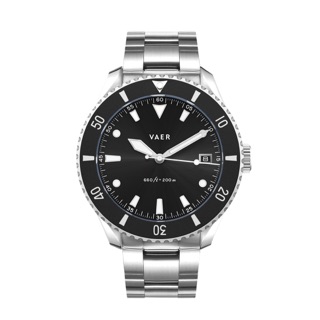
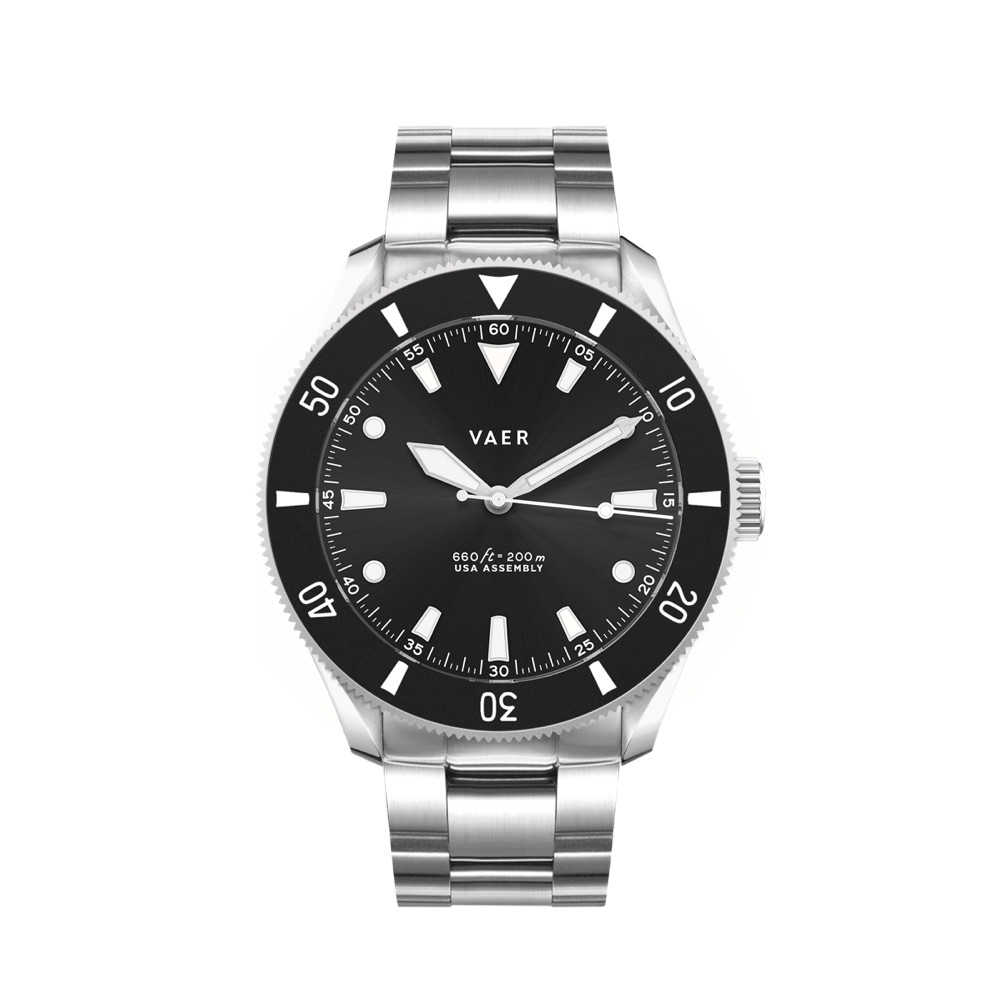
Ø39 mm · solar · 200 m · $429 · The signature model · solar
Vaer D4 Meridian Solar 39mm
39 × 46 mm · ref 40 × 47
MovementEpson VS22 solar quartz
Case39 mm
Lug to lug46 mm
Thickness11.96 mm
Lug width20 mm
Water resistance200 m
Crystalsingle domed sapphire, AR coated
Bezellumed ceramic
LumeSuper-LumiNova X1 W20, 20 layers
Case material316L steel
Price$429
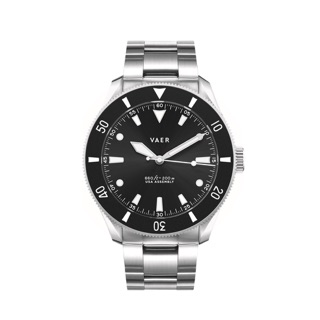
The Vaer the name is attached to, at $429: 39 mm, 46 mm lug-to-lug, 11.96 mm thick, 200 m, solar, assembled in the US. On the sheet it is the D5 with a solar movement in place of the Miyota, $300 cheaper and 0.06 mm thicker, and the D5's only reply is the automatic. The DS4 at $299 is the same idea at 42 mm from Hong Kong for $130 less. Against the field, the Seiko Prospex solar divers and the Citizen Promaster Eco-Drive give a bigger service network with a Hardlex or mineral crystal and a longer lug-to-lug. At $429 the D4 is the compact one with sapphire, and that is the whole argument.
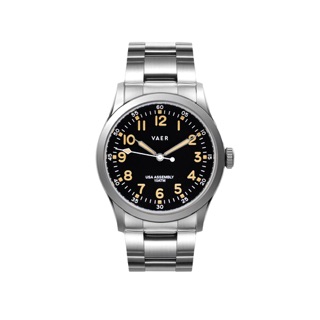
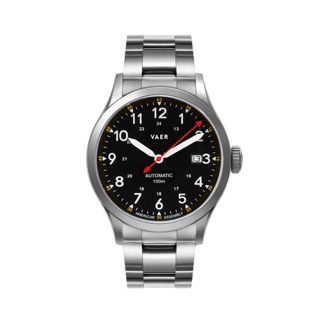
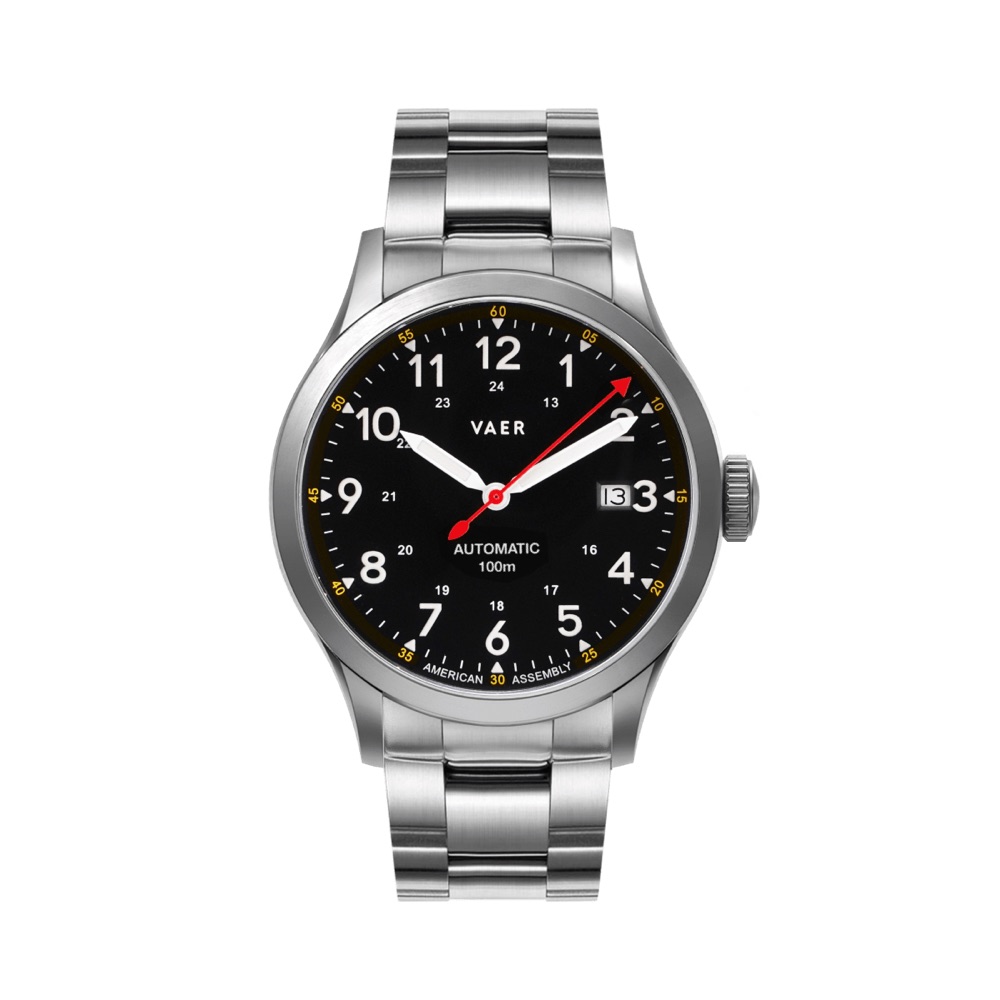
The field automatic at $599: 40 mm, 48 mm lug-to-lug, 10.4 mm thick, Miyota 9015, 100 m, assembled in the US. The 9015 is thin and high-beat at 28,800 vph, with hacking and hand-winding, and it lets the A5 match the solar C5's 10.4 mm with an automatic inside. The C5 is the alternative for $250 less if the movement is not the point. The Traska Summiteer 38 at $700 is 1.5 mm smaller, 2 mm shorter and hardened for $101 more, and does not say where it was assembled; the Vaer does. On the numbers the A5 is the automatic field watch at this money for a wrist that can take 48 mm.
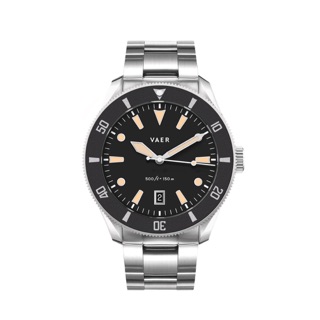
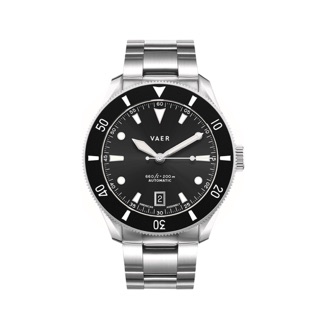
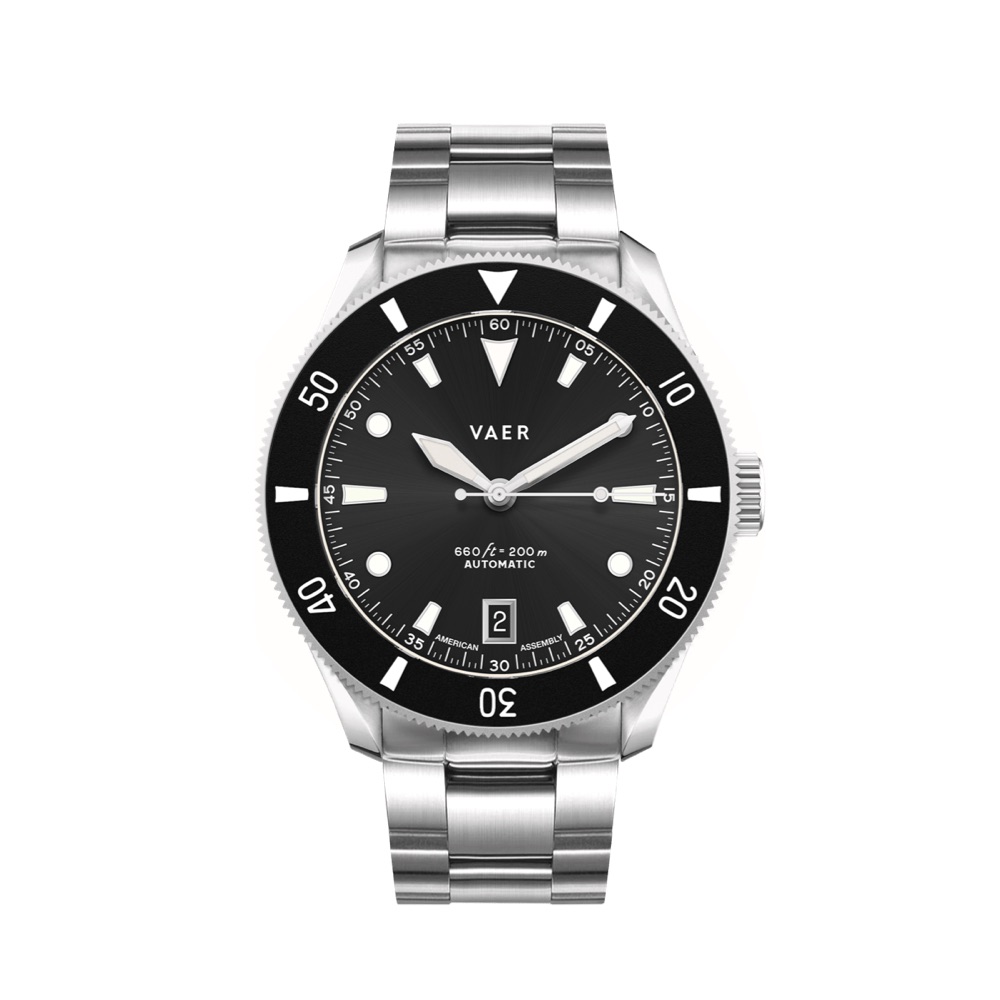
Ø39 mm · automatic · 200 m · $729 · Automatic diver
Vaer D5 Meridian Auto 39mm
39 × 46 mm · ref 40 × 47
MovementMiyota 9015 automatic
Case39 mm
Lug to lug46 mm
Thickness11.9 mm
Lug width20 mm
Water resistance200 m
Crystalflat sapphire
Bezelpolished ceramic, coin-edge
LumeSuper-LumiNova BGW9 A grade dial (25 layers), X1 C1 hands
Case materialstainless steel
Price$729
The automatic diver at $729: 39 mm, 46 mm lug-to-lug, 11.9 mm thick, Miyota 9015, 200 m, assembled in the US. Under $750 it sits with the Lorier Neptune at $699, the Traska Freediver at $735 and the Baltic Aquascaphe MK2, and its point of difference is the footprint: 46 mm is short for a 39 mm diver, and 2 mm shorter than the Freediver. Traska gives a hardened case for $6 more; Lorier gives the same 46 mm for $30 less on a Miyota 9039. Choose the D5 for the US assembly and the 200 m; choose the D4 for the same case with $300 kept back.
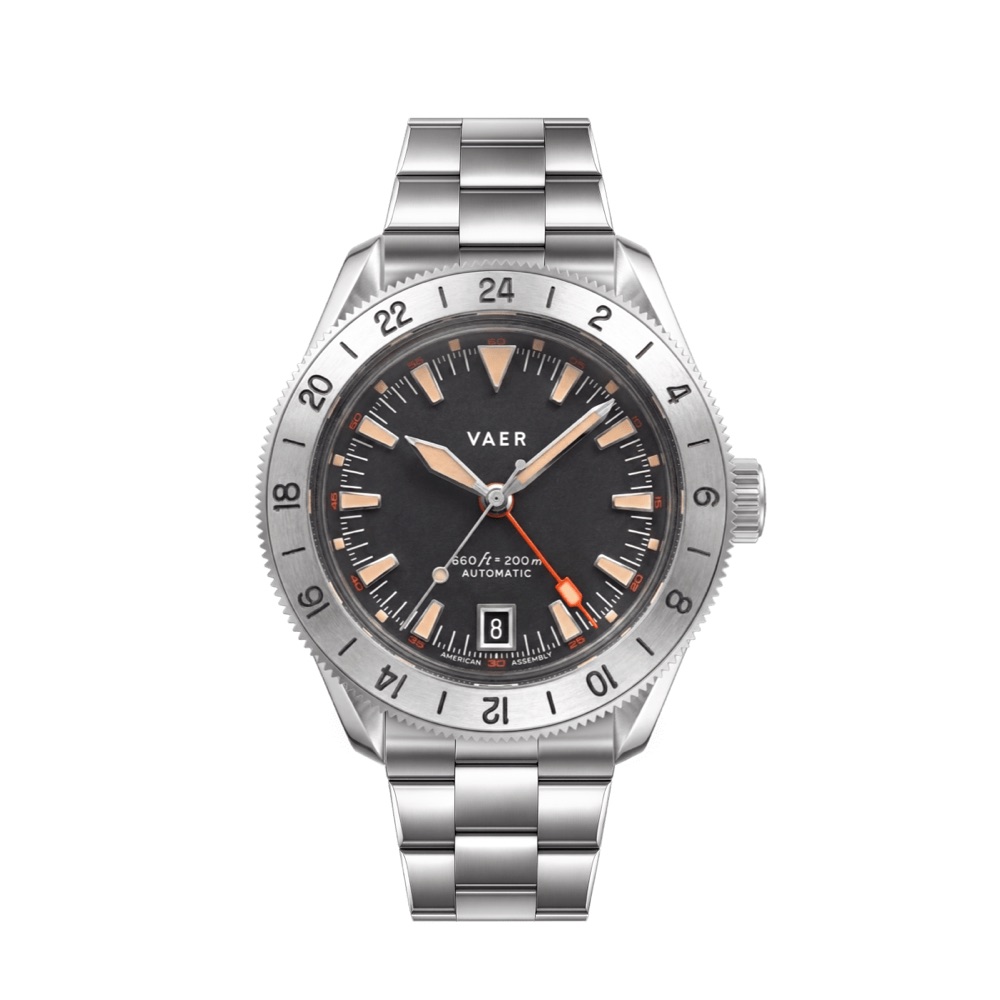
MovementMiyota 9075 automatic (true GMT, jumping local hour)
Case39 mm
Lug to lug45.83 mm
Thickness11.83 mm
Lug width20 mm
Water resistance200 m
Crystalbox sapphire, AR coated
Bezelbidirectional 120-click brushed steel 24h
LumeOld Radium Super-LumiNova, 15 layers
Case material316L steel
Price$989
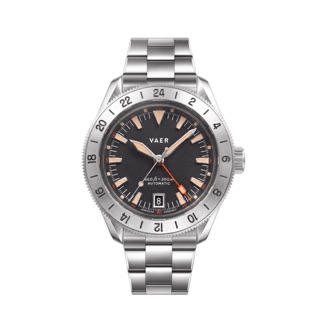
The true GMT at $989 on the Miyota 9075: 39 mm, 45.83 mm lug-to-lug, 11.83 mm thick, 200 m, assembled in the US. The local hour jumps in one-hour steps while the 24-hour hand holds home time, and that distinction is the whole reason to pay $989 rather than $400 for a caller; the GMT list explains it. The Traska Venturer at $950 runs the same 9075 with an internal 24-hour ring for $39 less; the Nodus Contrail at $900 has a rotating bezel for $89 less and a March 2027 restock date. At 45.83 mm the G5 is the shortest of the three.
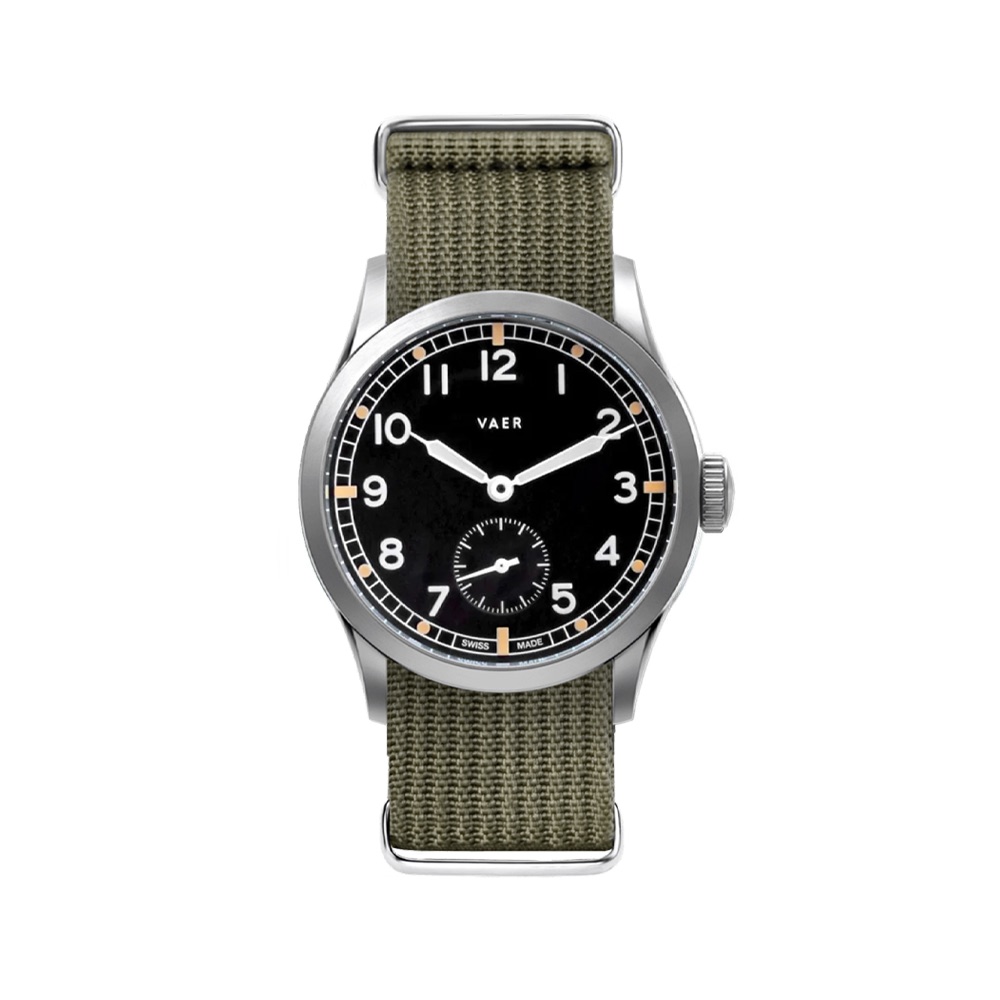
Ø36 mm · automatic · 100 m · $1,099 · Swiss movement · smallest case
Vaer A12 Dirty Dozen 36mm
36 × 43 mm · ref 40 × 47
MovementSellita SW260-1 automatic (Swiss)
Case36 mm
Lug to lug43 mm
Thickness10.4 mm
Lug width20 mm
Water resistance100 m
Crystaldomed sapphire, internal AR
Case material316L steel
LumeSuper-LumiNova W20, 25+ layers
Price$1,099
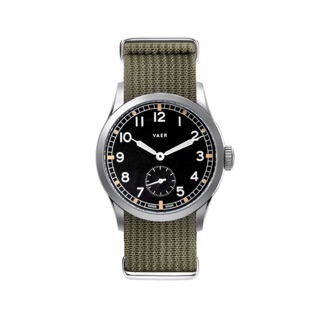
The Swiss Vaer at $1,099, assembled in Switzerland on a Sellita SW260-1: 36 mm, 43 mm lug-to-lug, 10.4 mm thick, 100 m. The name is the twelve British-issue field watches of 1945. It is the only Vaer over $1,000 and the only one with a Swiss movement, and it costs $500 over the A5 for the movement, the assembly site and 4 mm less diameter. The C3 is the same footprint for $319. Christopher Ward and Formex put a Swiss movement in a case for less; the Serica 7505 at $1,290 is the certified 35 mm field watch for $191 more. Buy the A12 for the size and the Swiss stamp; the money is in the stamp.
Vaer is for a buyer who wants one watch that goes in the sea and needs neither a winder nor a battery shop, which is the solar D4 and C5 exactly. It fits a small wrist better than most microbrands: the C3 and A12 at 43 mm lug-to-lug and the D-series at 46 mm are short for their diameters. Look elsewhere if you want a Swiss movement under $1,000, since Vaer's is $1,099 and Christopher Ward and Formex do it for less; if you want a bracelet as standard, since most lines ship on straps and Traska and Nodus put one in the box; or if you want every model assembled in one place, since three of the eleven are assembled in Hong Kong and the price says so.
Where it sits against the field
At $429 the D4 solar is priced against the Seiko Prospex solar divers and the Citizen Promaster Eco-Drive, both of which give a bigger brand's service network with a Hardlex or mineral crystal and a longer lug-to-lug; the Vaer gives sapphire and 46 mm. At $729 the D5 is in the same band as the Lorier Neptune, the Traska Freediver and the Baltic Aquascaphe MK2; of those, Traska's hardened case and Baltic's French design are the alternatives, and the Vaer's answer is the shorter case and the US assembly. The G5 at $989 is one of the few true GMTs under $1,000 on a Miyota 9075, and the others are in the GMT list.
Questions people ask
Where are Vaer watches made?
In three places, stated per product page. The D4, D5, C5, C3, A5, S5 and G5 pages say assembled in the USA; the A12 Dirty Dozen says Switzerland; the DS2, DS4 and RS1 say Hong Kong. Cases and movements are sourced from Japan, Switzerland and Asia, as with nearly every brand at this price.
Are Vaer watches Swiss or Japanese movement?
Both, by model. Epson (Japan) solar quartz in the D4, DS4, C5 and C3; Miyota (Japan) automatics in the D5, A5 and G5; a Sellita (Switzerland) automatic in the A12; a Seiko VK63 meca-quartz in the RS1; and Miyota quartz in the S5 and DS2. Only the A12 is assembled in Switzerland.
What is the difference between the Vaer D4 and D5?
The movement and $300. Both share the 39 mm case, 46 mm lug-to-lug, 200 m rating and sapphire crystal, and both are assembled in the USA. The D4 runs an Epson solar quartz movement and lists at $429; the D5 runs a Miyota 9015 automatic and lists at $729. Thickness is within 0.1 mm.